
Home / Technical Guides / What Is a Pipe Fitting
BasicsWhat Is a Pipe Fitting? Meaning, Functions and Joint Types
A pipe fitting is a component installed between lengths of pipe to join, turn, branch, change size or close a pipe run. Almost every piping installation uses fittings, with the joint type and material chosen to suit the pipe and the project specification.
Quick Answer
Pipe fittings have five main functions:
- Join two straight pipes — sockets (couplings), nipples
- Turn the flow — 90° and 45° elbows
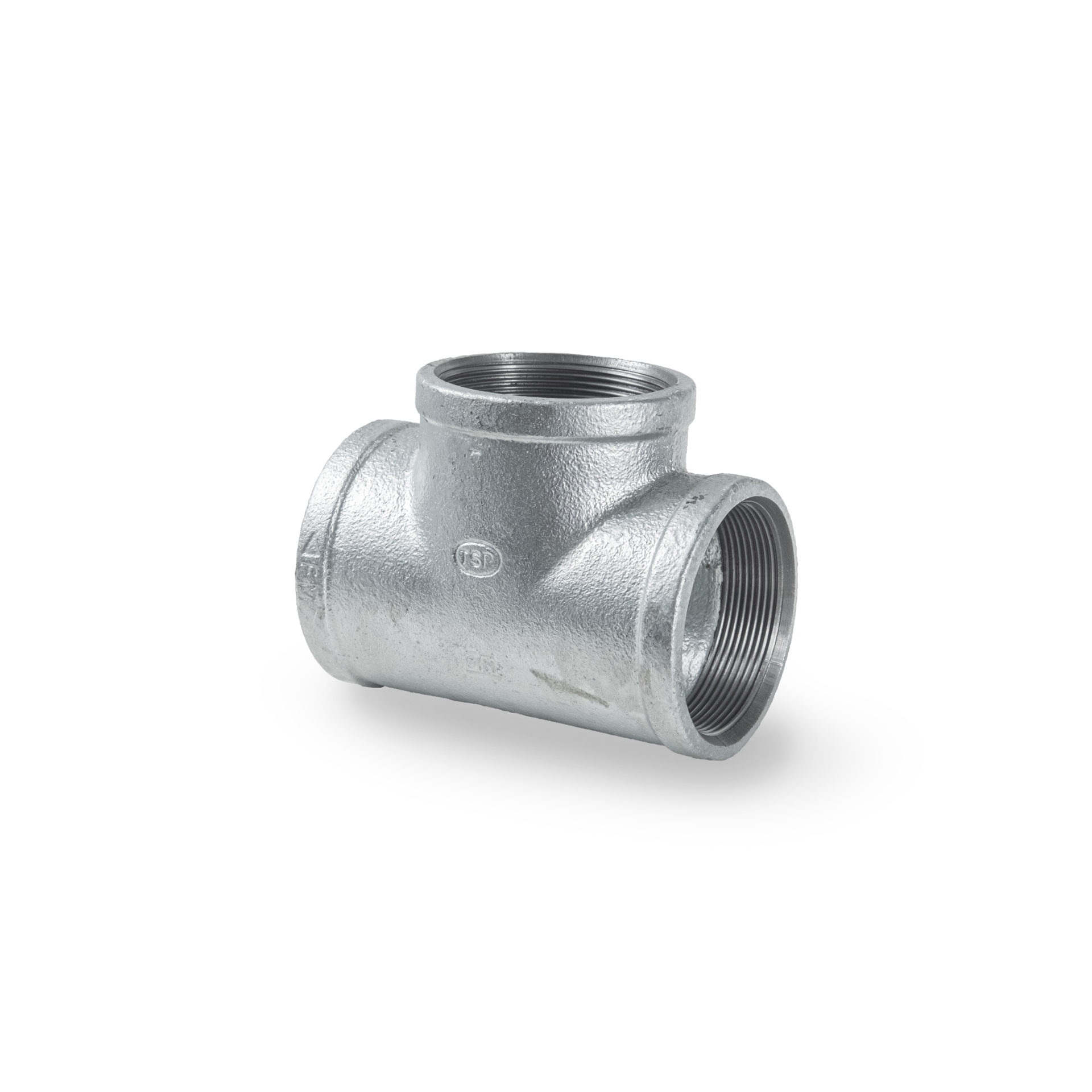
- Branch the flow — tees, crosses
- Change size — bushings, reducing sockets, reducing tees
- Close a pipe end — plugs, caps
- Plus unions, which make a joint easy to disconnect
Pipe fitting functions and examples
| Function | Example fittings | Purpose |
|---|---|---|
| Straight joint | Socket (coupling), nipple | Extending a pipe run |
| Turn | 90° elbow, 45° elbow, street elbow | Following a change of direction |
| Branch | Tee, reducing tee, cross | Splitting flow to several points |
| Change size | Bushing, reducing socket | Connecting two different pipe sizes |
| Close | Plug, cap | Closing a pipe end or spare outlet |
| Disconnect | Union | Easier maintenance next to pumps, meters or valves |
Types of pipe fitting joints
Besides their function, fittings differ in how they connect to the pipe:
| Joint type | How it connects | Typically found on |
|---|---|---|
| Threaded | The pipe’s male thread screws into the fitting’s female thread, with thread sealant | Small to medium iron/steel pipe, e.g. malleable iron fittings |
| Welded | The fitting is welded to the pipe end | Permanent steel pipe installations |
| Flanged | Two flanges are bolted together with a gasket between them | Connections to valves, pumps or equipment that must be removable |
| Grooved | The pipe end is grooved and clamped with a coupling | Pipe systems designed for grooved couplings |
| Solvent | Plastic pipe and fitting are bonded with a special cement | PVC pipe |
Common pipe fitting materials
- Malleable iron — threaded fittings for iron/steel pipe, black or galvanized. See What Is a Malleable Iron Pipe Fitting.
- Carbon steel — typically welded and flanged fittings.
- Stainless steel — used when the specification calls for stainless material.
- Brass and copper — common in copper pipe and sanitary installations.
- Plastics (PVC, PPR) — joined by solvent cement or heat fusion.
Material choice follows the medium carried, working pressure and temperature, and the standard required by the project. PT Tri Sinar Purnama manufactures threaded malleable iron pipe fittings, black and galvanized, from ¼″ to 6″.
Need threaded fittings for a project?
Tell us what you need — TSP’s team helps match type, size and standard on WhatsApp.
Terms to know before choosing a fitting
| Term | Meaning |
|---|---|
| Nominal size (inch / DN) | The size designation of the pipe, e.g. ½″ or DN 15 |
| BSP / NPT thread | Two different pipe thread systems that must not be mixed |
| Male / female | External thread / internal thread |
| Reducing | A fitting with two different sizes, e.g. 1″ × ½″ |
| Pressure class | For example Class 150 and Class 300 in ASME B16.3 |
| Finish | Black (uncoated) or hot-dip galvanized |
More detail in Pipe Fitting Sizes, BSP vs NPT Threads and Class 150 vs Class 300.
Conclusion
A pipe fitting is a small component that defines how an installation runs: it joins, turns, branches, changes size and closes pipe. Know the function, joint type and material, then match size, thread and standard to the project specification.
Talk to TSP about your fittings
Our team helps you choose malleable iron fittings that suit your installation.
Frequently Asked Questions
What is a pipe fitting?
A pipe fitting is a component installed between lengths of pipe to join, turn, branch, change size or close a pipe run.
What are the functions of pipe fittings?
The five main functions are joining straight pipe, changing direction, branching flow, changing size and closing a pipe end. Unions add the ability to disconnect a joint.
What are the types of pipe fitting joints?
Common joint types are threaded, welded, flanged, grooved and solvent-cemented joints for plastic pipe.
What is the difference between a socket and a nipple?
A socket has female threads on both ends to join two pipes. A nipple is a short piece of pipe with male threads on both ends, used to join two female fittings.
Which pipe fittings does TSP manufacture?
PT Tri Sinar Purnama manufactures threaded malleable iron pipe fittings, black and galvanized, from ¼″ to 6″, to ASME B16.3, EN 10242, JIS B 2301 and SNI 139:2024.
Related Guides
Data sources: trisip.com Products, Fitting Standards and Technical Data pages; general piping practice.